
- Home
- Government
- Committees A Through L
- Historical Commission
Historical Commission
March 11, 2025
For the most recent information on the Historic District Study Committee, please visit their page by clicking HERE.
Agendas & Minutes
Agendas are available prior to the meetings. Minutes are available following approval.
- 1 Andrew J. Hadley House(1806)
- 2 Augustus and Noah Handy House(1854)
- 3 Augustus Nickerson House(c.1890)
- 4 Capt.Henry Delano House(1837)
- 5 Capt.Wm Hathaway House(1820)
- 6 Charles A.Clark House(c.1860)
- 7 Elizabeth Taber Library 1872
- 8 Elizabeth Taber,Erik Durant (2020)
- 9 Elizabeth Taber,Erik Durant (2021)
- 10 Freeman Ryder House(c.1675-1690)
- 11 George Bonum Nye House(1800)
- 12 Handys Tavern (1812)
- 13 Josephine Briggs House(1830)
- 14 Oakhurst-H.Shepard House (1905)
- 15 Oakhurst-the H.Shepard House(1905)
- 16 Old Landing Half Cape(c.1750)
- 17 Percy Brown House (1881)H.H.Richardson
- 18 The Allen-Briggs Farmhouse(c.1800)
- 19 The Anchorage(c.1900)
- 20 The Barnabus Gurney House(1835)
- 21 The Cape Cod RR Depot(c.1890)
- 22 The Chinese Moon Gate (1921)
- 23 The Congregational Chapel(1885)
- 24 The Congregational Church (1841)
- 25 The H.Hammett House(1850)
- 26 The Hamlin Boathouse(c.1890)
- 27 The Jennie Bell House(1820)
- 28 The Job Blankinship House(c.1795)
- 29 The Old Faunce Schoolhouse(1814)
- 30 The Old Parsonage(1813
- 31 The Old Stone Studio (1820)
- 32 The Old Stone Studio(1820)
- 33 The Pond House(1799)
- 34 The Shepard House Carriage House(1905)
- 35 The Sherman Inn(1806).Now BYC
- 36 The Anchorage(c 1900)
- 37 Percy Brown House (1881)H H Richardson
- 38 The Captain John Pitcher House(1813)
- 39 Old Landing Half Cape(c 1750)
- 40 The Congregational Chapel(1885)
- 41 George Bonum Nye House(1800)
- 42 Charles A Clark House(c1860)
- 43 Augustus Nickerson House(c1890)
- 44 Augustus and Noah Handy House(1854)
- 45 Andrew J Hadley House (1806)
Mission
The Marion Historical Commission, with the Town's adoption of MA General Laws Part I Title VII Chapter 40 Section 8D, has been established for the primary purpose of identifying and protecting the Town's historic resources. This includes buildings, structures, objects, and sites of national, state, or local significance based on an understanding of their historic, architectural, and/or archeological importance.
The primary responsibility of the Marion Historical Commission is to coordinate all community-wide historic preservation planning on behalf of the Town. This includes educating the public about the identification of historic resources and the importance of preserving and protecting such resources. The Commission also serves as a public advocate to advise the Select Board and other local agencies regarding matters of preservation, protection, and redevelopment of historic buildings, structures, and sites that may be under consideration by said boards.
November 2025 Update:
Marion’s Percy Browne House named to 2025 MA Most Endangered Properties List
Preservation Massachusetts has named 10 historic properties, including the Percy Browne House in Marion, to the 2025 Most Endangered Historic Resources List. Selections from across the Commonwealth were announced in October, 2025 at the Lyman Estate in Waltham.
Since 1993, the Massachusetts’ Most Endangered Historic Resources Program has been key in identifying endangered historic resources from across the Commonwealth and discovering ways in which to work collaboratively with partners toward positive preservation outcomes.
This year’s list was chosen by a committee from nominations submitted by groups and individuals concerned with local preservation issues. Submissions are researched and judged by several criteria, including their historic significance, the extent of the threat, and the community’s commitment to preserving the resource.
The Percy Browne House at 192 Front Street sits on a hilly ridge overlooking Sippican Harbor. Designed by architect Henry Hobson Richardson, with 1903 additions possibly by Charles Allerton Coolidge, the house was built for Richarson’s friend, the Rev. Percy Browne.
As described in the Awards Announcement, “The Percy Browne House is regarded by many architectural historians as the prototype of the Shingle Style in America, influencing countless later examples throughout New England and beyond. Its design anticipated ideas later refined by Richardson’s associate Stanford White… The house also reflects Marion’s late 19th century associations with national intellectual life—President Grover Cleveland, a friend of Percy Browne, summered here, as did Trinity Church Rector Phillip Brooks.”
Positioned on the campus of Tabor Academy, the house was last used for faculty housing until 2010. Since then, it has been vacant. Demolition was briefly considered in 2019, causing a national outcry among preservationists and much local objection as well, led by the Marion Historical Commission. The Commission has been working with Tabor to find solutions that both protect this unique innovative example of the Shingle Style and also serve Tabor’s needs for current and future programming and growth.
Tabor Academy acknowledges the significance of the property. Earlier this year they commissioned a campus masterplan by Sasaki of Boston. They have also just recently retained Saltonstall Architects to conduct a feasibility study to explore best future uses of the property, per Sasaki’s recommendation.
“We are hopeful that this designation will send a note of urgency to the community. We all have a responsibility to save this little gem and insure it survives as the hidden treasure that it is,” noted Meg Steinberg, chair of the Marion Historical Commission. “The Historical Commission looks forward to collaborating with Tabor to find a dynamic new use for this unique property.”
September 2024
Marion Preservation Committees -- What Each One Does
Many people are asking why Marion seems to have several different preservation groups, and what each one does. Here we explain the various titles and responsibilities:
The Marion Historical Commission is a Town-appointed board and an important part of municipal government. Each city and town in Massachusetts has one.Historic Commissions are responsible for community-wide historic preservation planning and are guided and supported by the Massachusetts Historical Commission in Boston.
The Marion Historical Commission’s first objective has been to update and complete a town-wide survey of historic buildings and places in Marion, which now include digital recording and availability on the statewide MACRIS website. The Commission also plays a leadership role in public education about the community’s historic resources and why they are important to preserve. Local commissions also prioritize properties for listing in the National Register of Historic Places, the nation’s honorary listing of buildings, structures, sites, objects and districts significant in our nation’s history, culture, architecture or archeology worthy of preservation.
The Historical Commission maintains a presence on the Town of Marion website, including our Mission Statement and links to important local historic maps, existing inventory forms and resources for ongoing preservation projects.
The Marion Village Local Historic District Study Committee was appointed by the Select Board in 2023 to explore the possibility of creating a Local Historic District as a way to ensure that Marion Village continues to maintain its historic and unique sense of place. Major changes such as demolition, new additions and new construction within a specified district would come under review to ensure the Village’s historic character is not being negatively impacted.
If a Local Historic District bylaw is enacted at a future date, a new committee would be formed to oversee the design review process according to the provisions of the bylaw. This new Marion Historic District Commission, would be a Town-appointed board of local residents who bring an array of talents and knowledge of history, architecture, development, construction and real estate backgrounds.
The Sippican Historical Society, which most people are most familiar with, is a privately funded 501(c)(3) non-profit organization with dues-paying membership. Founded in 1963, its mission is Education, Historical Preservation and Outreach to increase interest in and support for Marion’s history. Through its museum, lectures, tours and involvement in the preservation of the Post Office, General Store, Town House, Music Hall, Captain Hadley House and other historic properties, the Society has played a key role in the preservation of Marion’s historic fabric. The Society and its museum are housed in the historic Walton Nye Ellis House.
The Marion Historical Commission and the Sippican Historical Society work closely together to promote preservation awareness and appreciation through public lectures and other programs.
April 2024: This information is provided to explain and clarify the Historical Commission’s role in local development and preservation activity. In addition to our Mission Statement, outlined below, here are some frequently asked questions about the Marion Historical Commission:
Why are you allowing so many historic buildings to be torn down and replaced by such big new buildings?
- The Marion Historical Commission is an advisory board and has no control over what gets demolished and what gets built in its place. This type of Design Review process would only be possible if a Local Historic District ordinance is approved by the Town. (A separate study committee is currently exploring this option.)
What determines if a building is historic or not?
- For the past five years, the MHC has been working with our preservation consultants to identify and survey all historic buildings in the town. As a general rule, historic buildings are over 50 years old and add to the architectural and visual character that defines the town. They may also play a role in understanding the historical development of the town over the past two centuries. The survey is about 80% complete at this time.
- Upon completion, survey forms are sent to property owners so they can become aware of the historic and architectural significance of their properties. The forms are also available for review at the Elizabeth Taber Library and the Sippican Historical Society.
How can we keep historic properties from being torn down?
- Some towns have instituted a Demolition Delay ordinance which requires a 12-18 month delay and due diligence procedure to try to find new uses for such buildings. This a possible option for Marion voters to consider in the future; creation of a Local Historic District could also help prevent demolition within the boundaries of the established district.
What does the Historical Commission do to help owners renovate their buildings in a historically sensitive way?
- The Commission is available to offer individual guidance and connect owners with historic resource information prepared by the National Trust for Historic Preservation, the National Park Service and other preservation organizations. Links are provided on this webpage. The Sippican Historical Society bookstore also has a number of books that promote architectural history education and adaptive reuse.
How can we promote more awareness of Marion’s historic and architectural charm?
- In addition to the ongoing efforts of the separate Marion Village Local Historic District Study Committee to evaluate options for creating a local historic district, our intent is to soon begin nominating properties and districts identified in our historic survey for listing in the National Register of Historic Places. This honorary designation recognizes the importance of individual buildings or districts without imposing any design review procedures or limitations on construction. More information on the benefits of National Register listing will be offered at community forums as we proceed with this effort over the next year.
February 2024: Summary of Completed and Ongoing Historic Survey Efforts in Marion
Summary: The Marion Historical Commission reports that we have made great progress in our efforts to complete a town-wide survey of historic properties. Since beginning this work in 2020, we are now in our fourth phase of the survey. This work was funded initially by two Survey & Planning Grants awarded by the Massachusetts Historical Commission, with matching funds provided by the Sippican Historical Society and subsequently by Community Preservation Funds.
To date, survey work has been completed in most of Marion Village and Water Street areas, including outer village areas along Converse Road. Old Landing, Old Depot and Rev. Oliver Cobb Areas along Front Street, the Tremont Advent Campground Area and numerous properties in North Marion have been surveyed, as well as the Portuguese neighborhoods near Giffords Corner and at Point Road.
Currently our consultant is addressing properties along Converse and Moorings Roads, Delano Road, Allen’s Point, West Drive, and Point Road. Many of these were initially surveyed in 1998 but now need to be updated to current state standards of the MA Historical Commission, the state-wide preservation agency.
These forms are on file at the Sippican Historical Society and at the Elizabeth Taber Library for public review, in addition to being available here on our website. These forms complement earlier work on many individual buildings completed in a 1998 town-wide survey and are also available on the state’s MACRIS website. (See link to MACRIS at left.)
Inventory Forms of the surveyed properties and areas and Maps of the surveyed locations can be found in the pull-down menu to the left on this page.
Update on the Marion Village Local Historic District Study
The Marion Historical Commission continues to advise and coordinate with the Marion Village Historic District Study Committee on the progress of their work to consider creating a Local Historic District in Marion Village. All historic properties within the proposed district have been surveyed by our preservation consultant. Property owners have received copies of the individual survey forms.
Additional information on the Study Committee’s progress is available on the Marion Village Historic District webpage, including the public presentation on the proposal held in September, 2023. A link to the recording is provided here:
https://www.marionma.gov/631/Marion-Historic-District-Study-Committee
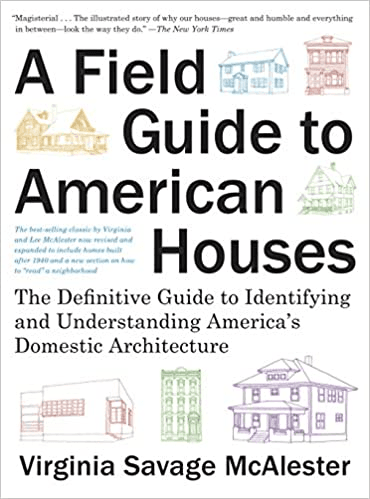
Bibliography of American Architectural Styles
The Historical Commission has compiled a brief list of books as introductory material for anyone interested in learning more about historic buildings and the various architectural styles most commonly found in our community.
Members
- Meg Steinberg, Chair
Term Expiration Date: June 2028 - Sidney R. Bowen, Member
Term Expiration Date: June 2027 - Bryan McSweeney, Member
Term Expiration Date: June 2027 - Will Tifft, Member
Term Expiration Date: June 2028 - John Morgan, Member
Term Expiration Date: June 2026